Spot what others pass by.
Notice the stamps, seams, and hidden details that make an ordinary-looking piece worth researching.
A REAL 2025 AUCTION RESULT
For a barn-found sign.
John Deere sign · Aumann, 2025 · Includes buyer’s premium ↗What are you about to throw away?
Learn to spot clues in overlooked old things, check real sold prices, and make a smarter sale before something valuable leaves your hands.
Digital ebook · Read on your phone, tablet, or computer

THE STORY BEHIND THE NUMBER
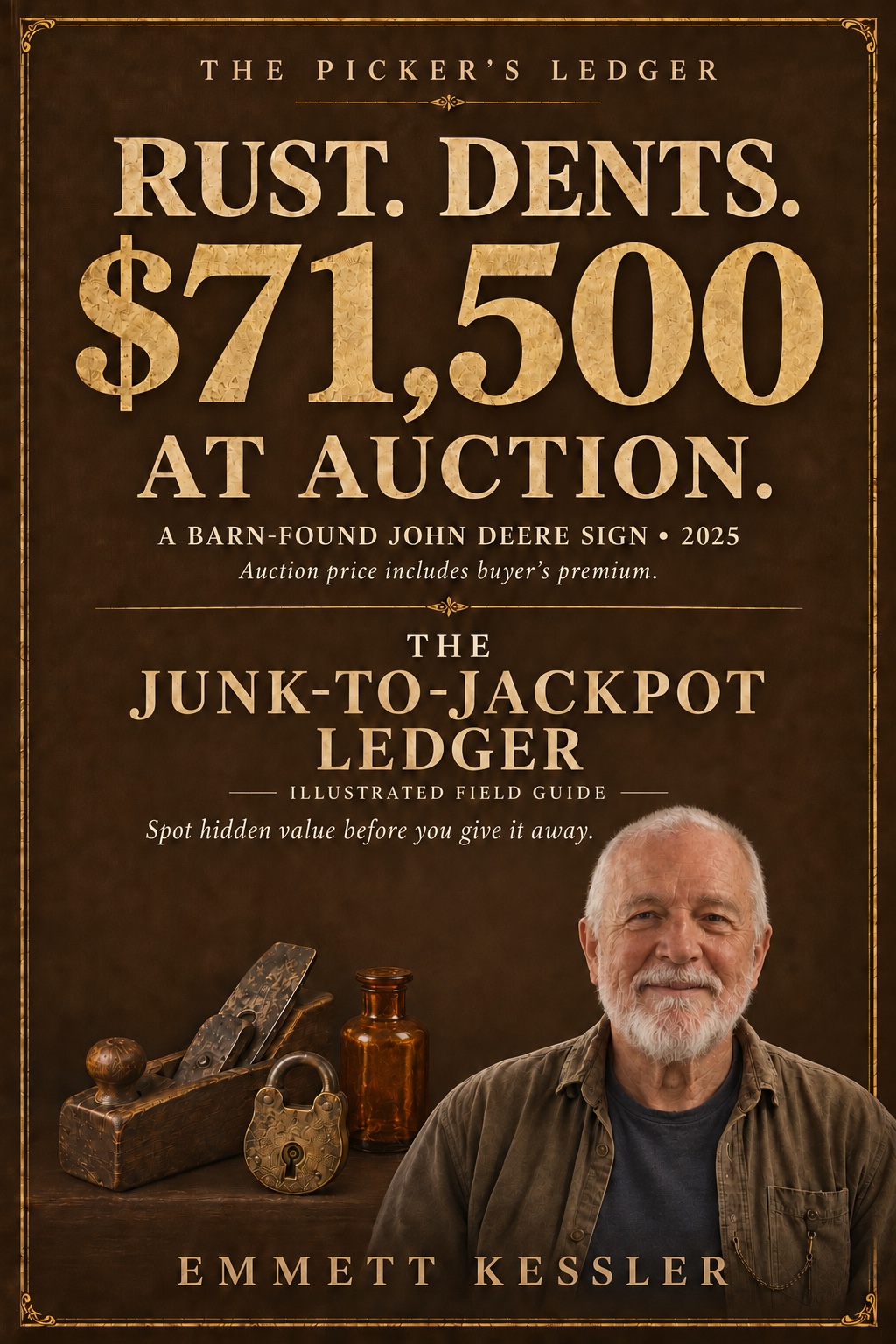
A late-1800s John Deere sign had rusty edges and small dents. Found in a Montana barn, it drew a $65,000 winning bid in April 2025. The $71,500 auction total includes the buyer’s premium.
This was an exceptional result. The useful habit is one you can learn: identify the object, check the evidence, and understand your selling options.
Read the original auction recordTHE OPPORTUNITY
You don’t always need to buy something new to find something worth selling.
Start with what’s already there. The hand-me-downs. The inherited workshop. The shelves you’re finally clearing out. A small detail can be the reason to pause before something leaves your hands.
The Junk-to-Jackpot Ledger shows you where to look, what to check, and how to work toward a sale that makes sense.
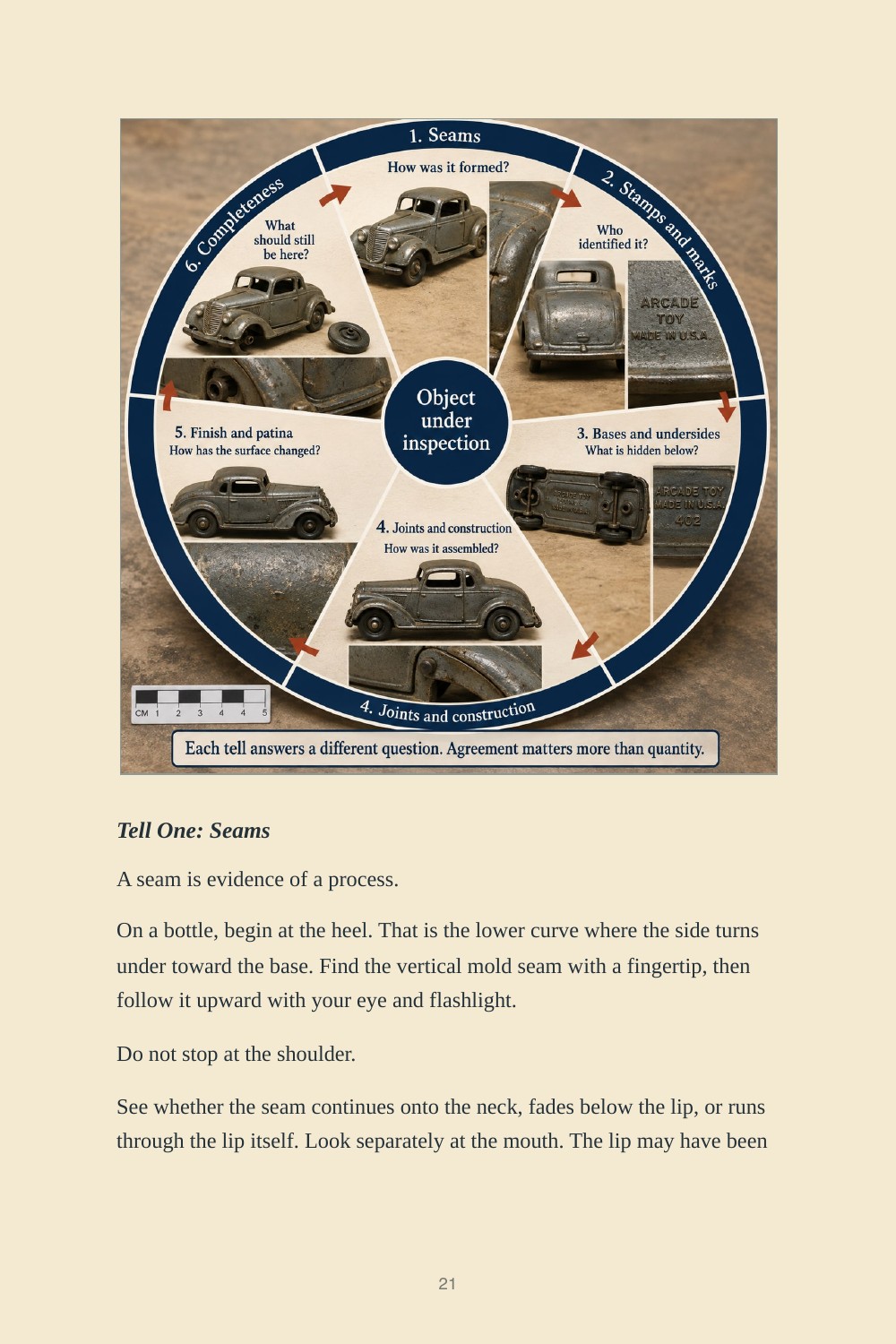
Notice the stamps, seams, and hidden details that make an ordinary-looking piece worth researching.
Compare actual completed sales, check condition, and separate a realistic price from wishful thinking.
Choose a selling route with fees, packing, transport, and your time in mind. The amount you keep is what matters.
THE METHOD THAT CHANGES THE WALK
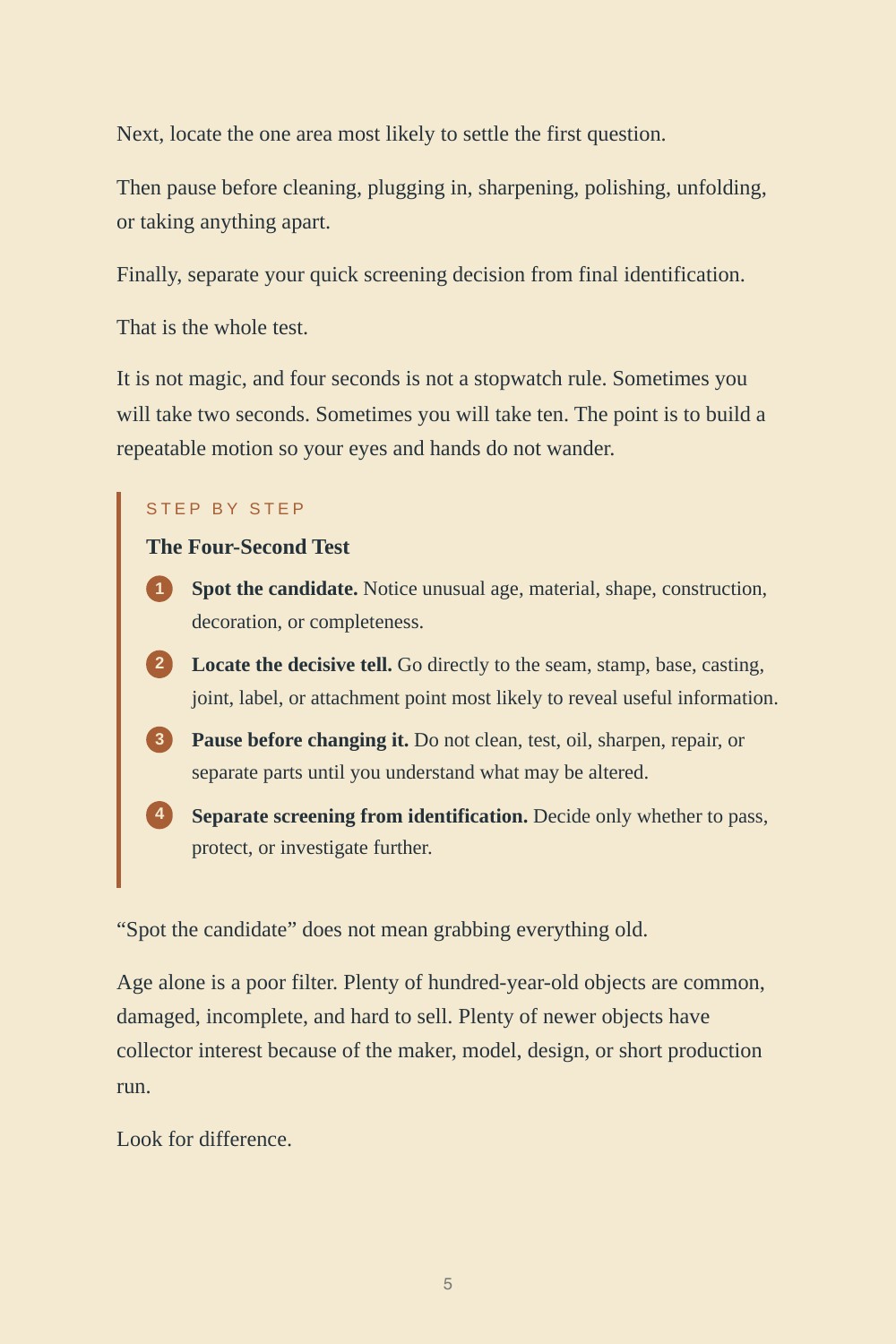
A faint stamp. An unusual seam. The original piece still with its set. The Four-Second Test tells you when to stop and take a closer look.
Notice the object that deserves a second glance.
Find the mark, seam, underside, or other useful tell.
Leave the finish alone. Keep the pieces together.
Separate a promising clue from a confirmed identification.
A quick first screen. Then the careful research that puts a price in context.
A WALK THROUGH YOUR OWN PROPERTY
Open the book where you are. Each room gives you a starting point, the details to inspect, and the next questions to ask.
The tools, hardware, and forgotten boxes out back.
PDF PAGE 54Maker’s marks hiding beneath a working life.
PDF PAGE 78The pieces mixed in with everything else.
PDF PAGE 101Packed-away belongings worth a second look.
PDF PAGE 122Shelves and storage with a story to tell.
PDF PAGE 141Look underneath the things you use every day.
PDF PAGE 160Old keepsakes, small details, overlooked clues.
PDF PAGE 180Little things that are easy to give away.
PDF PAGE 200The familiar objects you’ve stopped noticing.
PDF PAGE 217Plus the know-how before and after the find.
The Six Tells · Reading sold prices · Confirming identity · Sell, hold, or pass · Your working ledger
OPEN THE LEDGER
Have a look at the book you’re getting. Clear explanations, illustrated reference pages, and a practical way to think through a find.
THE PART THAT ENDS UP IN YOUR POCKET
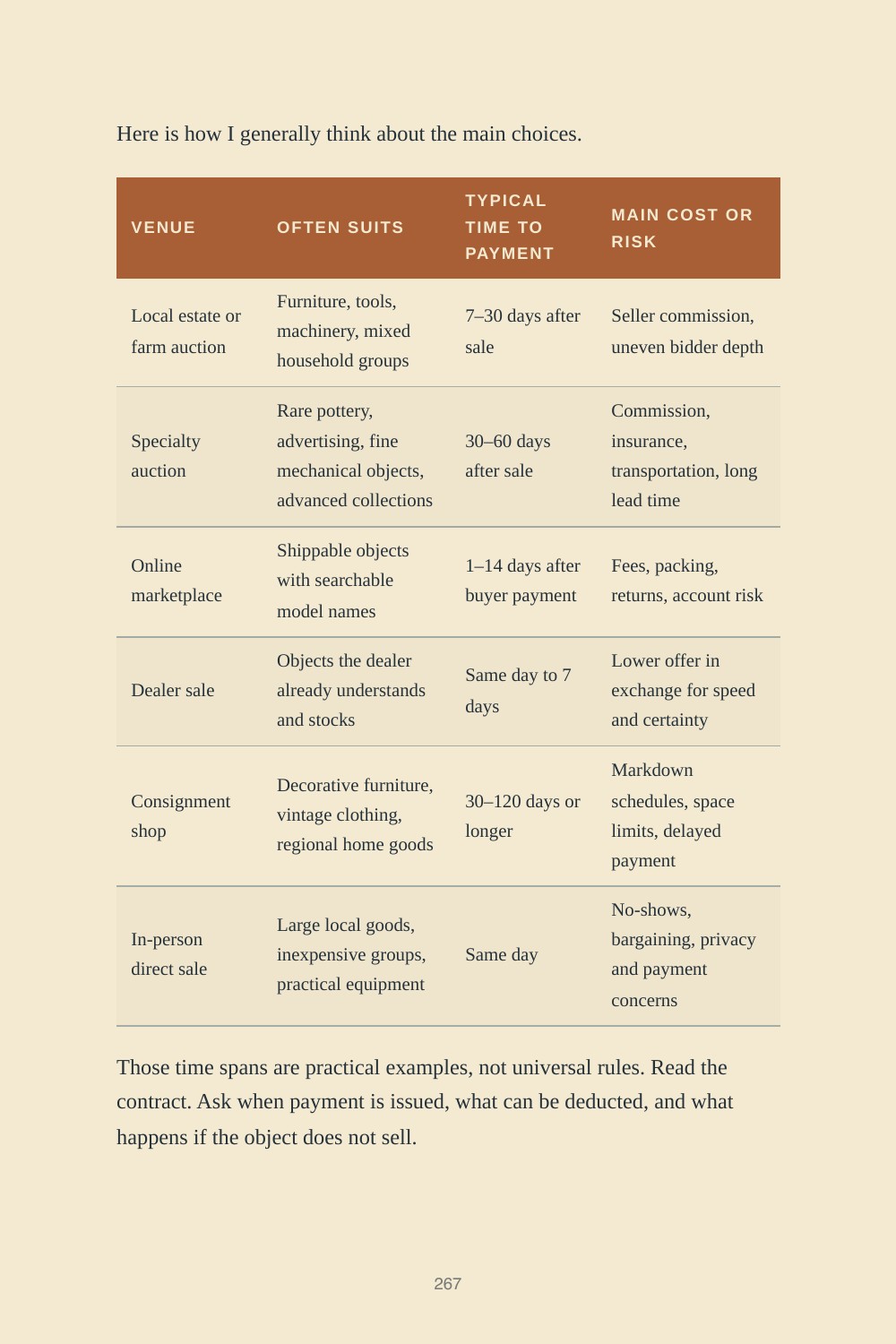
Online marketplace, local auction, specialist, or dealer? The highest-looking offer doesn’t always leave you with the most money.
The Ledger helps you compare your options before you commit.
Compare the time and effort, too. A practical decision beats a tempting headline.
TAKE A BETTER EYE TO YOUR NEXT FIND
FIRST EDITION · DIGITAL EBOOK
THE COMPLETE BOOK
Your room-by-room guide to finding overlooked resale value—and making a better decision about what happens next.
The ebook is coming soon. Explore the sample pages above.
Digital PDF. No physical book will be shipped.
The opportunity depends on the object. Condition, authenticity, demand, and selling costs affect the result. The book teaches a method; it does not promise a particular income.
BEFORE YOU GET STARTED
You bring the curiosity.
The Ledger gives you a place to start.
YOUR FIRST FIND STARTS WITH A SECOND LOOK
Look first. Check the tell. Then decide.